
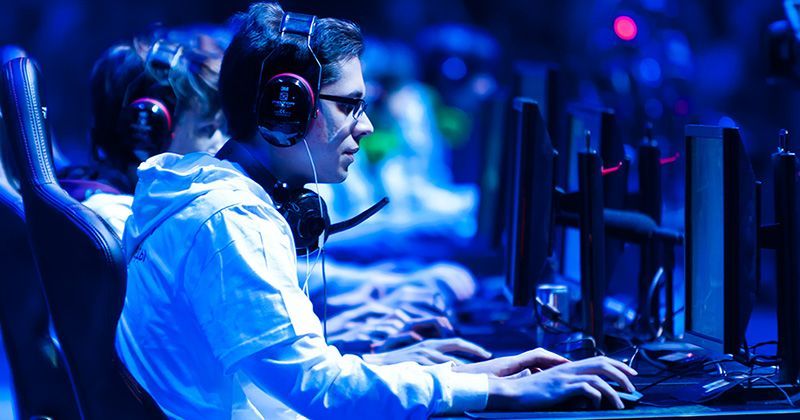
The rise of online https://hoki123.net/ has reshaped the entertainment landscape in unprecedented ways. While traditional sports have been popular for decades, online gaming competitions—often referred to as esports—are now emerging as a legitimate force in the world of competitive entertainment. With millions of viewers, substantial prize pools, and professional players, esports are not only redefining what it means to be a “sport” but also changing the way we engage with athletic competition. Let’s explore how online gaming competitions are transforming the face of sports, pushing boundaries, and creating a new era of entertainment.
1. Esports as a Global Phenomenon
Esports, short for electronic sports, refers to organized, multiplayer video game competitions, particularly between professional players, individually or as teams. Unlike traditional sports that require physical presence on a field or court, esports allows competitors to participate from anywhere in the world, leading to a massive global following.
Games like League of Legends, Dota 2, Fortnite, and Counter-Strike: Global Offensive have become global sensations, with millions tuning in to watch professional tournaments. The international appeal of esports has attracted diverse audiences, transcending language barriers and uniting fans from different corners of the world. Much like traditional sports leagues, esports tournaments are broadcasted on television, live-streamed on platforms like Twitch, and covered by mainstream media outlets.
Why It Wins:
- Esports break geographical barriers, uniting players and fans globally.
- Platforms like Twitch and YouTube Gaming have made esports accessible to everyone.
- Huge tournaments attract millions of viewers, rivaling traditional sports events.
2. The Professionalization of Esports
As esports continue to grow in popularity, they have undergone a transformation into a legitimate career path for professional gamers. Similar to athletes in traditional sports, esports players now undergo intense training, build their skill sets, and compete for sponsorships and endorsements.
Top players often train for several hours a day, mastering the strategies of their respective games and developing team dynamics to succeed in tournaments. Esports teams, much like those in traditional sports, have coaches, analysts, and managers who guide the players’ performance. The increasing recognition of esports as a profession has brought in major sponsorships, investments, and even corporate deals, making esports an increasingly viable career option.
Why It Wins:
- Esports players are treated like professional athletes, with coaches and support teams.
- Sponsorship deals and endorsements are on the rise, providing financial incentives.
- As the industry matures, esports careers are becoming more formalized and respected.
3. Esports and Traditional Sports Convergence
One of the most exciting developments in the rise of online gaming competitions is the growing convergence between esports and traditional sports. Major traditional sports organizations, including the NBA, NFL, and Formula 1, have invested heavily in esports, seeing it as an opportunity to connect with younger audiences and expand their brands.
The NBA, for example, launched the NBA 2K League, a competitive league based on the popular basketball video game series, NBA 2K. Similarly, the Formula 1 Esports Series allows racing fans to compete in digital versions of the sport. This convergence not only legitimizes esports but also draws more attention to its competitive nature, increasing its visibility in the mainstream media.
Why It Wins:
- Esports are increasingly being embraced by traditional sports leagues, creating crossover events.
- Sports organizations see esports as a way to engage younger audiences who are passionate about gaming.
- Increased media coverage and collaborations raise the profile of both esports and traditional sports.
4. Massive Prize Pools and Sponsorships
In the early days of esports, prize money was modest, but today, competitive gaming has exploded into a multi-million-dollar industry. Major esports tournaments feature prize pools that rival some of the biggest traditional sports events. For example, The International, an annual Dota 2 tournament, consistently offers prize pools over $30 million, with the winners taking home a share of that sum.
Corporate sponsorships from global brands such as Coca-Cola, Intel, and Red Bull have played a crucial role in funding these massive tournaments. These sponsorships allow event organizers to offer large prizes, pay players, and produce high-quality broadcasts. As a result, players are not just competing for glory—they’re competing for life-changing amounts of money.
Why It Wins:
- Massive prize pools make esports tournaments highly lucrative for participants.
- Corporate sponsorships elevate the status of esports, bringing in more investment.
- The financial incentives increase the stakes of competition, attracting top-tier players.
5. Changing How We Watch Sports
The way we watch sports has evolved, and online gaming competitions are at the forefront of this change. Traditional sports are often broadcast on television, but esports are primarily live-streamed on platforms like Twitch, YouTube Gaming, and Facebook Gaming. These platforms allow viewers to interact with streamers, ask questions, and follow players’ journeys in real time.
Esports events are also increasingly streamed live in virtual arenas, where fans can watch in real-time through augmented reality (AR) or virtual reality (VR) headsets. This immersive viewing experience is attracting a new generation of sports fans who prefer the interactive, digital nature of watching games unfold online.
Why It Wins:
- Live-streaming platforms provide a more interactive and engaging experience for viewers.
- Virtual arenas and VR technology allow fans to watch in an entirely new way.
- Esports bring the excitement of competition directly to fans through online streaming.
6. The Growth of Esports Betting
Just as traditional sports have embraced betting, esports is following suit with increasing interest from the gambling community. Online gaming competitions now feature a growing number of betting opportunities, with fans able to wager on the outcome of tournaments, individual matches, and even player performance.
Esports betting platforms allow fans to place bets in real time, adding an extra layer of excitement to the competitions. As esports events gain more viewership, the rise in betting activity is creating a new avenue for revenue generation within the industry. Just like in traditional sports, esports betting is contributing to the increasing financial value of online gaming competitions.
Why It Wins:
- Esports betting adds excitement and engagement for fans watching tournaments.
- Betting opportunities open up new revenue streams for esports organizations.
- Esports betting mirrors the experience of traditional sports betting, making it appealing to fans.
7. Esports in Schools and Universities
Esports is not only slot deposit 1k traction with professional leagues but is also being integrated into educational institutions. Many high schools and universities are now offering esports programs, complete with training, competitions, and scholarships. Institutions like the University of California, Irvine, and Harrisburg University have created esports teams and academic programs dedicated to developing the next generation of professional players and game developers.
Esports in education helps bridge the gap between traditional sports and digital entertainment, providing students with opportunities to build skills that translate into real-world careers. It also fosters teamwork, strategic thinking, and leadership abilities—similar to what is learned in traditional sports programs.
Why It Wins:
- Esports programs in schools offer students a chance to pursue gaming professionally.
- Universities are recognizing esports as a legitimate career path with scholarships and training.
- Esports fosters valuable life skills like teamwork, communication, and strategic thinking.
Conclusion: The Future of Sports Is Digital
Online gaming competitions are transforming the world of sports, ushering in an era of digital athletes and global audiences. As esports continue to evolve, they are becoming a staple of modern entertainment, providing fans with new ways to engage with competition, new career paths for players, and even new technologies for immersive viewing experiences.
With massive prize pools, high-level competition, and cross-industry partnerships, esports are here to stay—and they’re poised to continue shaping the future of sports. Whether you’re a casual gamer, a passionate esports fan, or someone exploring the world of online gaming, it’s clear that esports is not just a passing trend but a transformative force in the world of entertainment and sport.