Your garage door is the largest moving entry point on your home. In Castle Rock and across Douglas County, that fact matters more than most homeowners realize. Residential break-ins through the garage are more common than through front doors, and they’re often faster, quieter, and harder to detect. If you want a real answer on how to tighten up your home’s security, garage door services in Castle Rock by Select Garage Doors covers the full range of security-related work, from opener replacement to hardware upgrades and full door inspections.
This guide covers the specific upgrades, habits, and technology choices that make a measurable difference. No filler. Just what works.
Why Is the Garage Door Such a Common Entry Point for Break-Ins?
Garage doors are targeted because they’re often the weakest link in a home’s security. Many homeowners focus their attention on deadbolts and window locks but leave the garage door running on outdated openers, without secondary locks, and with the door-to-home interior unlatched. That combination is an open invitation.
The problem in Castle Rock specifically is that many homes here were built in the 1990s and early 2000s. Openers from that era use fixed-code technology, a single, repeating radio frequency that a thief can capture with a cheap device and replay to open your door. If your opener is more than 10 to 15 years old and you haven’t replaced it, your garage door may be less secure than you think.
What Is a Fixed-Code Opener and Why Should You Replace It?
Older openers transmit the same code every single time you press the remote. Code-grabbing devices can intercept that signal and store it. A thief walks back later, replays the code, and your door opens. Rolling-code technology, which generates a new code every time the remote is used, closes this gap entirely. It’s the baseline standard for any new opener installed today, and upgrading to one is the single highest-impact security improvement most Castle Rock homeowners can make.
What Physical Security Upgrades Make a Garage Door Harder to Force Open?
Rolling-code openers protect against electronic attacks. But a determined intruder who doesn’t have a code-grabbing device may simply try to force the door open manually. Here’s where physical hardware matters.
Should You Add a Deadbolt or Slide Lock to Your Garage Door?
Yes, and it’s one of the lowest-cost upgrades available. A vertical slide bolt or a cane bolt mounted to the interior of the door prevents it from being lifted even if the opener is compromised or unplugged. These locks are designed specifically for garage doors and cost between $20 and $60 at most hardware stores. The catch: you can only engage them from inside the garage, so they work best as an extra layer when you’re home for the night or away for an extended trip.
Does the Emergency Release Cord Create a Security Vulnerability?
It can. The red emergency release cord that hangs from the opener trolley is designed to let you open the door manually during a power outage. But there’s a well-known technique where a thief slides a wire through the top gap of the door to hook and pull that cord from outside. A zip tie or a dedicated emergency release shield covers this gap. Cut the zip tie yourself when you need to use the emergency release, or install a locking release mechanism that requires a key.
Is a Garage Door Security Bar Worth Installing?
For doors with a center track, a floor-mounted security bar or a door brace can prevent the door from being forced up. These brace directly against the floor and lock the bottom panel in place. They’re most useful for attached garages where a breach would give direct access to the home’s interior.
How Does Smart Technology Improve Garage Door Security?
Smart garage door openers and add-on controllers give you real-time awareness of what’s happening at your garage — from anywhere. That alone changes how you think about security.
What Does a Smart Garage Door Controller Actually Do?
A smart garage door controller connects your existing opener to your home Wi-Fi and lets you monitor and control the door through a smartphone app. You can see whether the door is open or closed in real time, get push notifications if it’s been left open longer than a set time, and close it remotely with one tap. For homeowners who leave for work and can’t remember if they closed the door, this eliminates the anxiety entirely.
Do Motion-Activated Lights Deter Break-Ins?
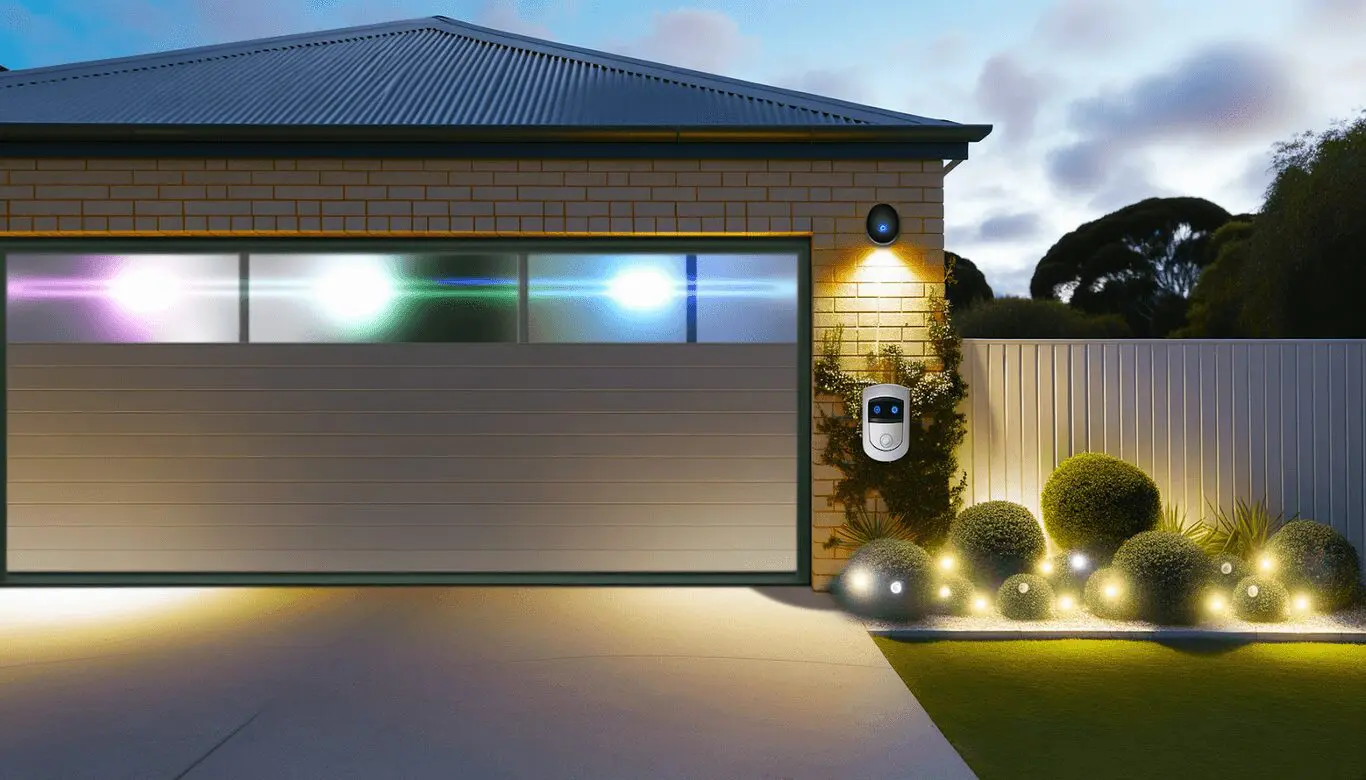
They do, and the research on this is consistent: well-lit entry points are less likely to be targeted than dark ones. Motion-activated LED floodlights positioned above and to the sides of your garage door make it much harder for someone to approach without being seen. In Castle Rock neighborhoods, where homes often have longer driveways and more space between properties, exterior lighting is especially worth the investment.
Can a Security Camera at the Garage Deter and Document Intrusions?
Yes to both. A visible camera acts as a deterrent. A recording camera provides footage if something does happen. Placement matters — position the camera to capture the full width of the garage door and the driveway approach, not just the door itself. Wi-Fi cameras that integrate with a phone app give you live monitoring without a monthly subscription in many cases.
What Daily Habits Protect a Castle Rock Home’s Garage Security?
Hardware and technology only work if the habits around them are solid. The most common garage security failures aren’t equipment failures — they’re human ones.
Should You Keep the Door Between the Garage and Home Locked?
Always. Even if your garage door is secure, the interior door connecting your garage to your home should be treated like a front door. That means a quality deadbolt and the habit of keeping it locked. If a thief does get into the garage through any means, that interior door is the last barrier between them and your living space.
Is It Safe to Leave a Garage Door Remote in Your Car?
No. A garage door remote left in a visible location inside your car — especially if the car is parked in the driveway — is essentially a key to your home left in plain sight. If your car is broken into, your home becomes accessible too. Use a keychain-style remote or a keypad entry instead.
What About Vacation Security for Your Garage?
Before leaving for an extended trip, unplug the opener and engage the manual lock. You can also disable the travel limit temporarily by unplugging the unit, which means the remote won’t function at all while you’re gone. A neighbor who can check the property, combined with smart monitoring, adds another layer.
What Should Castle Rock Homeowners Do First?
Start with an assessment. Walk around your garage and ask: How old is the opener? Does it have a rolling-code system? Is there a secondary lock? Is the door-to-home interior locked? Is the emergency release protected? Is there exterior lighting?
Most homeowners find at least two or three gaps in that list. The good news is that none of these fixes require major renovation. A rolling-code opener replacement, a slide bolt, a smart controller, and a motion light covers the majority of the risk — often for under $500 total.
That said, some security gaps require a professional look. If your door has a gap at the top, panels that are warped, a worn weatherseal, or hardware that’s showing its age, those physical issues can create vulnerabilities that no app or lock will fix. Getting an annual garage door inspection from a qualified technician keeps you ahead of problems before they become liabilities.
Frequently Asked Questions
What is the most effective way to prevent garage door break-ins?
Upgrading to a rolling-code opener is the single most impactful step, as it eliminates the fixed-code vulnerability that older openers carry. Pairing that with a secondary manual lock and motion-activated lighting covers the most common break-in methods.
How do I know if my garage door opener uses rolling code technology?
Check the label on your opener’s motor unit or the remote — rolling-code systems are often labeled as “Security+” (LiftMaster/Chamberlain), “Intellicode” (Genie), or “SecureCode.” If you can’t find a label or the unit is more than 15 years old, assume it uses fixed-code and consider replacing it.
Can someone open my garage door with a universal remote?
On older fixed-code openers, yes — universal remotes and code-grabbing devices can replicate the signal. Rolling-code systems change the code after every use, making them effectively immune to this type of attack.
Is it worth getting a garage door alarm?
A door-mounted contact alarm that triggers when the door is opened without authorization adds a useful layer, particularly for vacation periods or when you’re home and want to be alerted to unexpected access. They’re inexpensive and easy to install.
How often should I have my garage door inspected for security and function?
Once a year is the standard recommendation for most residential garage doors. An inspection covers springs, cables, rollers, weatherseals, the opener mechanism, and the overall alignment — all of which affect both function and security.
Does the garage door brand matter for security?
The brand matters less than the technology standard. Any opener that uses rolling-code encryption and has a backup manual lock provides good baseline security. What you want to avoid is any unit predating 1996, which is when rolling-code technology became widely adopted.
What’s the risk of leaving the garage door open while working in the yard?
It’s a real risk, especially in suburban areas where opportunistic theft is more common than planned break-ins. A thief walking or driving by can grab valuables from an open garage in seconds without entering the home. Keeping the door closed when the garage is unattended removes this exposure entirely.
2274 Manatt Ct, Castle Rock, CO 80104
Phone: 303-381-0005