Img alt: Verify adult access and enjoy age-appropriate NSFW AI conversations with an AI girlfriend on Crush On AI.
An “I am over 18” button once did all the work: click it, enter the adult site, and continue. NSFW AI platforms now ask some users to verify their age before granting access to unfiltered chats or explicit characters.
This shift has a clear cause. Governments in the UK, European Union, Australia, and several US states are demanding proof that online services keep adult material away from minors. AI companions draw added scrutiny because they do more than show content: they respond, adapt, remember details, and may form emotional bonds.
Age Checks Are Appearing Across Adult AI Platforms
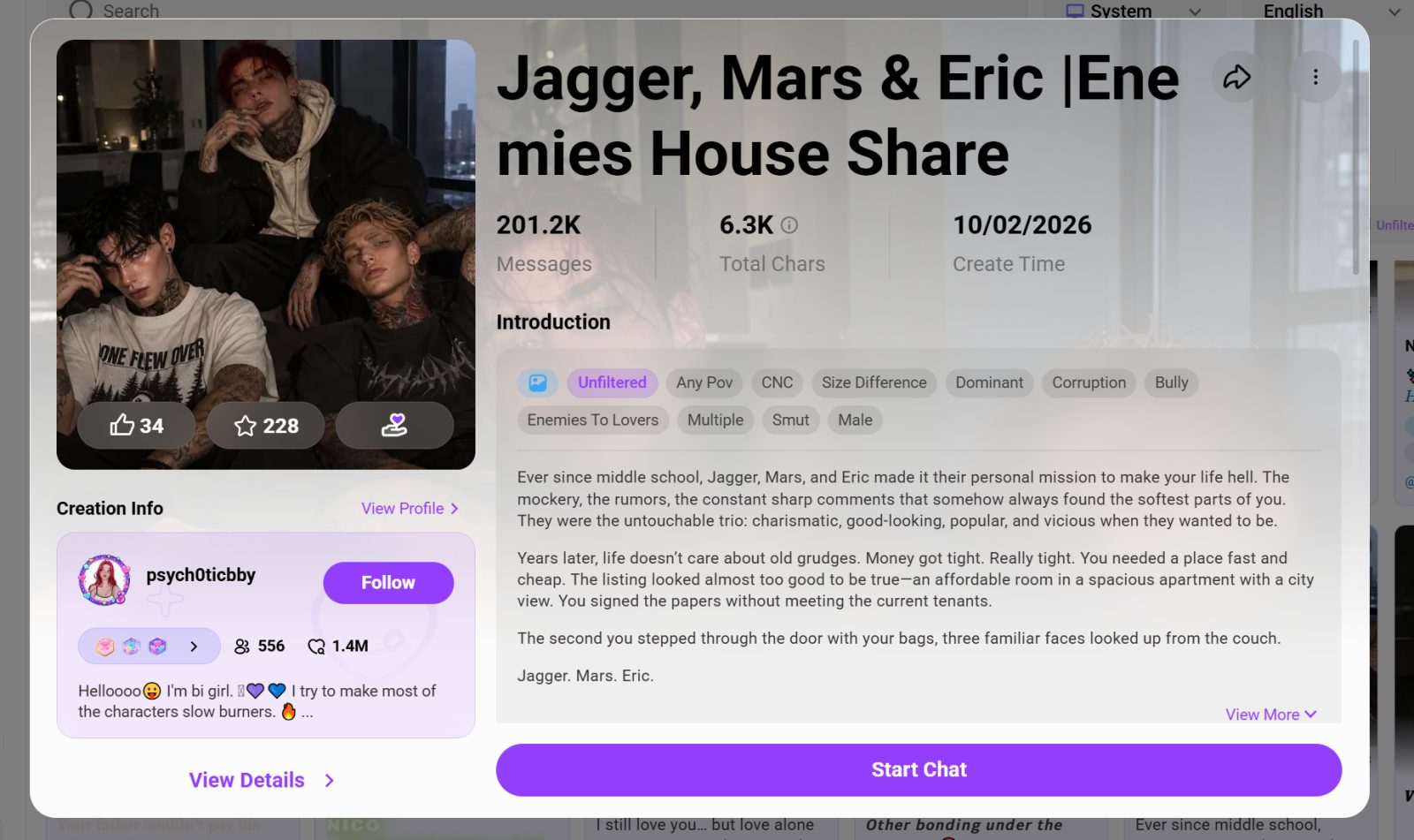
NSFW AI services often divide their features into content levels. Filtered mode keeps public conversations safer, while an 18+ or unfiltered setting permits explicit language, adult images, and sexual roleplay. In theory, users control the switch.
Identity was the weak point. A minor could sign up, enter a fake birth date, and switch on the adult setting. The platform could see which mode was active; it had no way to tell who had chosen it.
Age verification changes that step. A service might ask a specialist provider to check a government ID, rely on an app-store age signal, request payment details, or estimate someone’s age from a selfie. Some systems send back only a yes-or-no confirmation of adulthood, keeping the person’s full identity away from the platform.
These approaches come with different trade-offs. An ID may give an accurate result, but it also exposes sensitive information. Facial estimation is faster, though it can misclassify adults who look young and teenagers who look older. Signals from an app store depend on how the account was created and on local regulations.
Platforms are introducing these checks region by region. One country may demand strong age assurance, while another still accepts a birth date. As a result, two people using the same service can encounter different login screens. Users experience the change as abrupt. A switch that worked yesterday might demand proof today, reflecting a legal and payment system that keeps shifting quickly.
Filter Toggles Could Not Reliably Keep Minors Out
Filters only address content after someone logs in; they cannot establish age beforehand. If an account depends on self-declaration, a minor can still choose the adult setting.
AI companions pose real risks for younger users, especially when conversations turn sexual or emotionally intimate. A chatbot may imitate affection, remember private details, and send messages that feel personal, which can leave a minor overly attached.
Privacy is another concern. Without understanding where the information goes, a child might upload a face, name a school, or describe abuse to a commercial system. Adult platforms need firmer boundaries; conversations can become intimate very quickly.
Content filters still miss things. Coded language can slip past safe mode, and users may push an ordinary character into explicit material. Community creators can also evade basic review with carefully chosen tags or images.
Age assurance adds another safeguard, but moderation still has to do its job. Its main benefit is reducing the likelihood that a child reaches the unfiltered section at all.
Crush On AI says its service is for adults, and every character must be clearly over 18. Real verification would make that rule enforceable rather than merely written in the terms. It would also give regulators and payment partners clearer evidence that the adult-only limit is being applied.
New Laws Are Turning Age Assurance Into a Requirement
The UK Online Safety Act imposes clear duties on services that publish or display pornography. Ofcom requires them to use highly effective age assurance, so children do not normally encounter adult material; a basic checkbox does not meet that standard.
The European Union is taking a similar approach. In 2026, the European Commission completed an age-verification system that lets people prove they are over 18 without handing every website all their identity details.

Australia has also moved toward age checks for restricted online material. On companion platforms, users in some regions have already been warned that discussions of adult topics may prompt verification. That worldwide pattern explains the sudden rush. A platform operating across multiple countries cannot handle age checks as a feature for one market; the system must respond to the user’s region and the content they want to access.
Why Some Crush On AI Accounts Now Face Verification
Some Crush On AI users might have to verify their age before they can access unfiltered features. The process may differ by account history, location, device, or local rules; Crush On AI has not described one standard flow for all users and regions.
The most plausible explanation is a mix of regulatory pressure and the company’s effort to manage platform risk. Crush On AI offers adult roleplay with wide latitude for fictional scenarios, placing it nearer to regulated adult-content services than to an ordinary productivity chatbot.
Payment processors and app stores can influence the outcome too. A law may never mention a particular platform, yet its financial or distribution partners can still insist on tighter safeguards. For an adult service, losing payment access may do more damage than losing an advertising campaign.
Verification also affects everyone else on the platform. If minors repeatedly get through to explicit bots, the company could face legal trouble, negative coverage, and tougher moderation rules. When the age gate fails, adult users may lose access to features as well.
Crush On AI already prohibits minor characters, depictions of known minors as adults, and adult images made without consent. Age checks give users an additional layer of protection alongside those rules. Not every account needs to submit an ID. Privacy-preserving age tokens and signals from app stores could limit how much data gets collected, but users should know exactly how the process works before they begin.
Age Verification Can Protect Minors and Threaten Privacy
The argument for age checks is straightforward: children should not be allowed into explicit AI spaces. Yet the privacy concern is just as serious. An adult may not want a government ID tied to a sexual chat account.
Verification vendors can attract attackers because they may store identity documents, selfies, dates of birth, and device data. If that information leaks, it could connect a real person with their use of an adult platform.
Good systems keep the connection to a minimum. A verifier confirms that someone is “18 or older,” then sends the platform a token rather than the person’s full ID. The adult site has no reason to receive that document. Delete the data promptly and protect anything retained with strong encryption.
People should be told plainly who conducts the check, which information gets stored, and when it will be deleted. A vague privacy notice can cause more anxiety than the check itself.
There also needs to be a way to challenge an age estimate. Mistakes happen. If an adult is classified incorrectly, correcting the result should be straightforward and should not require sharing extra information with arbitrary support staff.
Platforms need to keep safety measures from becoming surveillance. Their job is to block minors from adult content, not create permanent records of every fantasy. Over time, privacy-preserving proof offers the sounder path.
Adult AI Access Is Moving Toward Proof Instead of Trust
The age-gate model is giving way. A birthday entered by the user or a content switch was never enough to keep minors out. Regulators now want services to demonstrate that their adult-only boundary works in practice.
Users may face more hassle. Logging in could take longer, and some will simply leave instead of submitting an ID or selfie. Others may agree to the check when the platform explains exactly what data it collects and how it limits its use.
For NSFW AI sex chat companies, reliable age checks can help protect adults’ freedom. A platform that successfully excludes minors is in a stronger position to provide legal, unfiltered content to verified adults.
A clear process gives users real choices and tells them who handles the check, whether their image is saved, and when that record will be deleted. They also need a straightforward way to appeal. “Verification failed” is not enough when an adult has paid for access.